Indian ethnic wear is evolving from a clothing category associated primarily with weddings, festivals and cultural celebrations into a growing year-round fashion business. Sarees, kurtas, lehengas, salwar suits and contemporary Indo-Western outfits are finding new customers through online retail, international boutiques and changing fashion preferences across India and overseas.
For businesses, this transformation represents more than the growing popularity of traditional clothing. It is opening opportunities in design, manufacturing, exports, digital retail and premium fashion, while creating new avenues for artisans, weavers and small apparel enterprises.
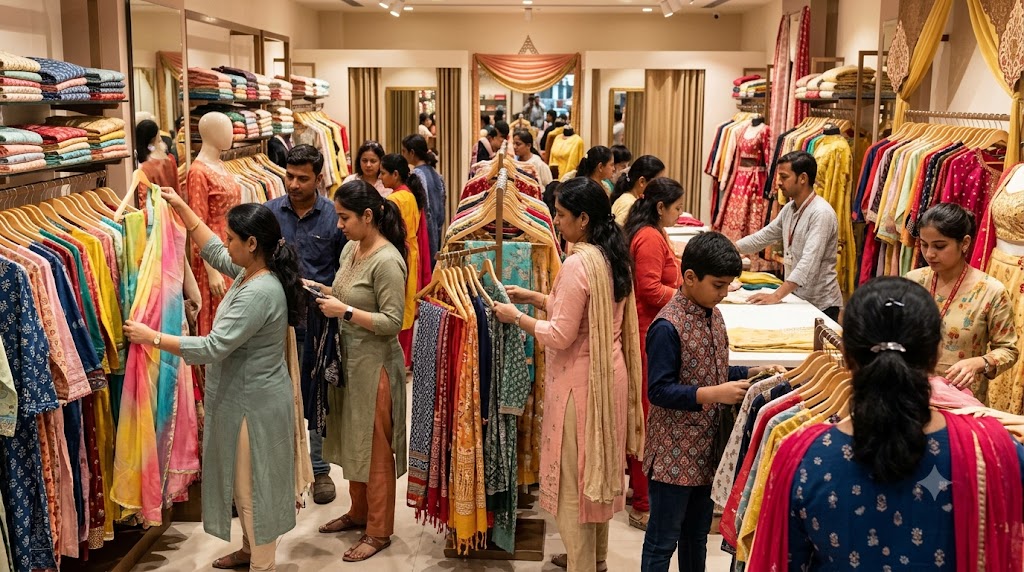
The domestic market is also expanding beyond occasion-led purchases. Consumers increasingly want ethnic clothing that can be worn to offices, social gatherings, family functions and everyday outings. Lightweight fabrics, contemporary cuts and coordinated sets are helping traditional styles adapt to modern lifestyles.
According to one industry estimate, India's ethnic wear market generated approximately $19.1 billion in revenue in 2023 and could reach $30.4 billion by 2030, growing at an estimated annual rate of 6.9%. Meanwhile, the wider Indian textile and apparel industry, including handicrafts, recorded exports worth approximately $37.75 billion in FY2024–25. Although these export figures cover a much broader industry than ethnic wear alone, they demonstrate the scale of India's established textile manufacturing and international distribution network.
Together, these trends highlight an important business opportunity: Indian ethnic fashion can build on its cultural identity while competing through design, quality, accessibility and global reach.
Indian Ethnic Wear Moves Beyond Weddings and Festivals
For decades, a significant share of ethnic clothing purchases in India has been linked to weddings, religious celebrations and festive occasions. These remain important sources of demand, but the market is increasingly finding opportunities in everyday fashion.
Working professionals are choosing kurtas, tunics and understated ethnic sets for office wear. Younger consumers are combining traditional garments with contemporary footwear, jackets and accessories, creating styles that suit different occasions. Lightweight sarees and simpler festive outfits are also appealing to shoppers who want traditional clothing without the cost or formality of heavily embellished garments.
This shift is commercially important because it can increase the frequency of purchases. A business that sells only expensive wedding outfits may depend heavily on seasonal demand, whereas one offering everyday clothing, workwear and occasion wear can reach customers throughout the year.
For manufacturers, this creates demand for a wider product range, including affordable basics, premium collections and versatile garments that can be styled in different ways.
The opportunity lies in understanding how consumers actually wear ethnic clothing today rather than relying entirely on traditional buying patterns.
A Large Domestic Market Creates Room for Business Growth
India's ethnic wear market benefits from a combination of cultural familiarity, regular family occasions and a wide variety of regional clothing traditions. Sarees, kurtas, lehengas, salwar suits and regional garments appeal to different customer groups, price points and purchasing needs.
Women remain a major consumer segment, while men's ethnic wear and children's festive clothing provide additional opportunities for retailers and manufacturers.
The market is also highly diverse. A customer shopping for an affordable cotton kurta has different expectations from someone buying a wedding lehenga or a handwoven silk saree. Businesses must therefore balance pricing, fabric quality, design and product positioning to serve specific audiences effectively.
Affordable clothing can generate sales through volume and repeat purchases, while premium products depend more heavily on craftsmanship, exclusivity and perceived value.
For smaller businesses, specialising in a clearly defined category can be more effective than attempting to compete across the entire market. A retailer focusing on everyday cotton wear, regional handlooms or contemporary festive clothing can develop a distinctive identity and build a more loyal customer base.
The Global Appeal of Indian Ethnic Fashion Is Expanding
Indian ethnic wear has an established customer base among overseas Indian communities, particularly in countries such as the United States, the United Kingdom, Canada and the United Arab Emirates. Weddings, festivals and family celebrations continue to support demand for sarees, lehengas, sherwanis and other traditional garments.
However, international demand is not limited to customers of Indian origin. Designers, fashion enthusiasts and consumers interested in distinctive textiles are also discovering Indian embroidery, handloom fabrics, prints and contemporary fusion clothing.
Online retail has made it easier for Indian businesses to reach these audiences without opening physical stores in every overseas market. A small label can showcase its collections internationally, accept digital orders and work with shipping partners to serve customers across borders.
The commercial potential is significant, but international expansion requires more than attractive designs. Businesses must account for shipping costs, delivery times, import duties, return policies, sizing differences and local consumer preferences.
Garments intended for international customers may also need clearer sizing information, fabric details and styling guidance. Brands that make cross-border purchases convenient and reliable can build stronger relationships with overseas buyers.
Digital Retail Is Changing How Ethnic Wear Brands Grow
Online shopping has transformed the way consumers discover and purchase ethnic clothing. Social media, digital marketplaces and direct-to-consumer websites allow businesses to present collections to specific audiences and receive immediate feedback on new designs.
Visual storytelling is particularly valuable in ethnic fashion. Customers often want to see how a saree drapes, how embroidery appears in natural light or how a kurta can be styled for different occasions. Detailed product photographs, short styling videos and accurate descriptions can help shoppers make informed decisions.
Digital channels also allow small businesses to test new collections without immediately committing to large retail investments. They can introduce limited product ranges, observe customer response and expand production when demand becomes clearer.
However, online competition is intense. Advertising costs, returns, discounts and delivery expenses can reduce profitability even when sales volumes increase. Businesses must also manage inventory carefully, particularly when dealing with garments that require different sizes, colours and fabric variations.
A strong digital presence is therefore only one part of the business model. Reliable fulfilment, consistent product quality and repeat customers are equally important for long-term growth.
Indo-Western Fashion Creates New Product Opportunities
One of the most promising developments in ethnic wear is the growing overlap between traditional design and contemporary fashion.
Kurtas paired with trousers, sarees styled with modern blouses, embroidered jackets and coordinated ethnic sets allow consumers to combine familiar cultural elements with modern silhouettes. These designs can appeal to customers who want clothing that feels traditional without appearing restricted to formal occasions.
For businesses, fusion fashion offers opportunities to create products with broader uses. A well-designed garment may be suitable for office wear, dinner outings and smaller celebrations, increasing its appeal beyond a single event.
It also encourages experimentation with fabrics, colours, cuts and embellishments. Lightweight materials and simpler construction can make some products more affordable, while distinctive design details help brands differentiate their collections.
The challenge is to maintain a clear identity. Businesses that follow every passing trend may struggle to build recognition, while those that combine contemporary styling with consistent design principles can establish a more recognisable brand.
Indian Artisans and Handloom Businesses Have a Larger Role to Play
India's ethnic wear industry draws strength from its diverse textile traditions, including handwoven fabrics, regional embroidery, block printing and specialised weaving techniques. These skills provide opportunities for businesses to offer products that are difficult to replicate through mass production alone.
Handloom sarees, embroidered garments and region-specific textiles can appeal to customers seeking distinctive products with a strong sense of craftsmanship. For international buyers, the story behind a garment can add to its appeal when supported by accurate information about its origin and production.
However, translating traditional craftsmanship into a scalable business is not straightforward. Handmade products often require more time, specialised skills and careful quality control than standardised garments.
Artisans may also face difficulties accessing large buyers, forecasting demand and negotiating prices that adequately compensate them for their work.
Businesses can help bridge this gap by developing reliable sourcing arrangements, planning production in advance and communicating realistic delivery schedules. Better coordination between designers, weavers, manufacturers and retailers can help preserve craftsmanship while creating more dependable commercial opportunities.
For the industry, the goal should be to expand demand without compromising the quality and skills that make these products distinctive.
Export Growth Offers Opportunities for Indian Manufacturers
India's textile manufacturing base gives ethnic wear businesses access to established capabilities in fabric production, garment construction, embroidery and finishing. These capabilities can support international sales when businesses identify suitable markets and maintain consistent product standards.
Official industry figures show that India's textile and apparel exports, including handicrafts, reached approximately $37.75 billion in FY2024–25. This figure should not be interpreted as ethnic wear exports alone, but it highlights the broader export ecosystem within which Indian fashion businesses operate.
For ethnic wear manufacturers, overseas opportunities may include supplying boutiques, working with international retailers, serving wedding customers and developing direct-to-consumer export channels.
Different markets require different approaches. Overseas Indian customers may prioritise traditional designs and occasion wear, while other consumers may be more interested in contemporary fusion clothing, distinctive fabrics or versatile separates.
Businesses entering export markets must also meet requirements relating to product labelling, quality, delivery, customs documentation and consumer protection. Currency movements and international shipping expenses can affect margins, making accurate cost calculations essential.
Manufacturers that combine dependable production with distinctive design and reliable delivery can be better positioned to develop lasting export relationships.
Pricing, Inventory and Quality Will Determine Profitability
Despite its growth potential, ethnic wear is a competitive business in which rising sales do not automatically produce higher profits.
Fabric costs, embroidery, labour, packaging, marketing and distribution all influence the final selling price. Premium garments may command higher prices, but they can also require longer production cycles and more working capital. Affordable clothing can sell in greater volumes, yet price competition may leave limited room for error.
Inventory is another major concern. Wedding and festive collections can experience strong seasonal demand, but designs may lose relevance after the season ends. Businesses that produce too much stock risk tying up capital in unsold garments, while insufficient inventory can lead to missed sales.
Careful demand forecasting, limited initial production runs and a balanced mix of evergreen products and seasonal collections can help manage these risks.
Quality control is equally important. Fabric consistency, stitching, colour accuracy and finishing influence customer satisfaction and repeat purchases. For online retailers, accurate photographs and descriptions can also reduce returns caused by differences between customer expectations and the delivered product.
Ultimately, a successful ethnic wear business must combine creative design with disciplined financial and operational management.
The Future of India's Ethnic Wear Business
India's ethnic wear industry is entering a period in which traditional clothing can reach customers through more channels, serve more occasions and compete in a wider range of markets.
The strongest opportunities are likely to emerge where businesses connect cultural identity with modern consumer needs. Everyday ethnic clothing can generate repeat demand, fusion designs can attract new audiences, and carefully positioned premium collections can create value through craftsmanship and distinctive design.
International expansion offers another avenue for growth, supported by India's established textile and apparel manufacturing capabilities. However, brands will need to invest in quality, distribution, product development and customer service rather than relying on cultural appeal alone.
For artisans and smaller manufacturers, stronger commercial partnerships could improve market access and create more predictable demand. For retailers, digital platforms can help expand reach and understand customer preferences. For exporters, the priority will be to build reliable supply chains and products suited to specific international markets.
Indian ethnic wear is no longer simply a category associated with traditional occasions. It is developing into a broader fashion business that connects heritage, contemporary design, manufacturing and global commerce.
The long-term opportunity lies in making Indian craftsmanship commercially competitive while ensuring that quality, fair value and customer trust remain central to growth.